Measuring the exposome
Although the Human Genome Project (HGP) has advanced our understanding of genetic architecture, it produced modest societal benefits to improving population health, with the global burden of chronic diseases continuing to rise. To bridge this gap, attention is increasingly turning to the Human Exposome, which is defined as the totality of all non-genetic exposures, including physical, chemical, biological, social, and lifestyle factors as well as their endogenous responses, that an individual experience from conception to death. The field of human exposomics is gradually gaining a huge momentum in both sides of the Atlantic Ocean, offering the opportunity to embark on similar to HGP global initiatives towards mapping and characterizing the spatiotemporal features of the Human Exposome.
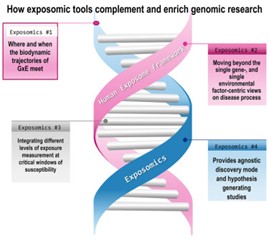
Figure 1 Graphical abstract of how exposomic tools complement and enrich genomic research. https://doi.org/10.1016/j.xgen.2025.100952
Our CLOTHO Lab makes the case for the human exposome by highlighting its unique features, as they:
1. Show where and when biodynamic trajectories of gene-environment interactions meet
2. Move beyond single environmental factor-centric views
3. Integrate measurements both within and outside critical windows of susceptibility
4. Enable agnostic discovery and hypothesis-generating studies
5. Characterize exposures as biodynamic systems that evolve over time
Upon applying these unique features of the human exposome, future human studies are anticipated to revolutionize the integration of genetics and environmental health sciences.
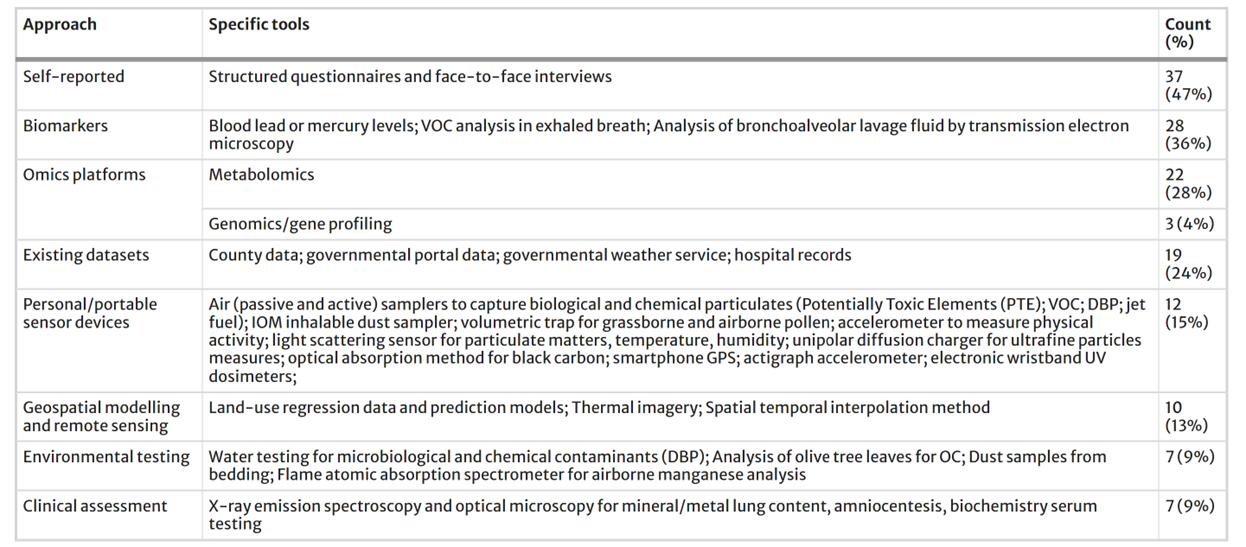
Our CLOTHO lab has been applying the most available exposomic tools in our exposome characterization and measurement strategy. This is evident in Table 1, which summarizes exposomic tools used in the global literature, based on a scoping review by our lab (Haddad et al., 2019).
Table 1 Count (%) of exposure assessment approaches in exposome studies n=78. https://doi.org/10.1007/s40726-019-00130-7
Biomarkers of exposure and biological effect
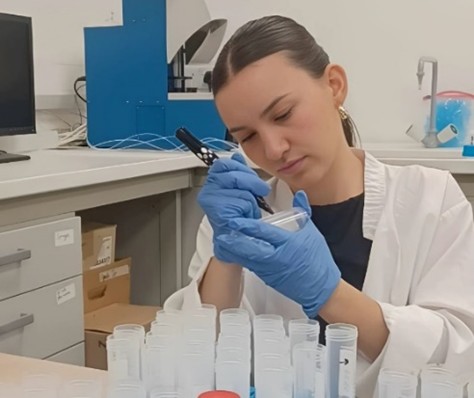
Our CLOTHO lab has extensive capabilities for measuring specific biomarkers of exposure and biomarkers of biological effect in human biospecimens for a suite of environmental stressors. Biomarkers of exposure include pesticides, plasticizers, trace metals, cotinine, iodine, and benzene, while biomarkers of biological effect encompass reproductive hormones, including circadian rhythm hormones like cortisol and melatonin. Our Lab regularly participates in interlaboratory schemes like the G-EQUAS.
Metabolomics Platforms
A multi-omics view of biomedical sciences using exposomics has emerged, recognizing that DNA sequence alone cannot explain chronic disease processes. The human exposome is inherently dynamic across both time and space. In this context, exposomics tools, combined with advanced biostatistical time-varying algorithms and biomedical technologies will prove highly valuable in the emerging multi-omics era, that views genomics, not merely as the study of DNA sequence variation, but as the exploration of the drivers of gene expression. Without this critical piece of the complex disease puzzle, a comprehensive understanding of human health will never be realized.
Our CLOTHO lab regularly applies untargeted metabolomics platforms in human biospecimen, for example, in children’s studies using the meet in the middle approach, such as in the ORGANIKO LIFE+RCT study (Fig. 2).
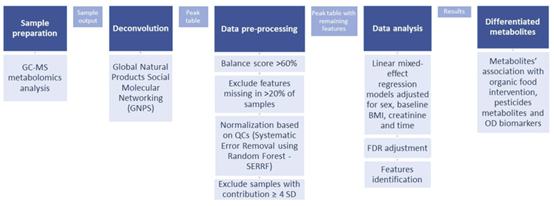
Figure 2 Untargeted GC-MS urinary metabolomics workflow: The ORGANIKO trial. https://doi.org/10.1016/j.envint.2021.107008
Wearable sensors
CLOTHO lab incorporates the use of wearable sensors in exposome studies of adults, employing devices, such as body skin temperature sensors and accelerometers (Table 2, Fig. 3). These tools support our efforts towards developing, testing and validating non-pharmacological interventions and other health technologies, for applications in both the clinical sector and public health practice.
Table 2 Wearable sensor-based air and skin temperature diurnal variation, number of peaks and activity measurements stratified by setting (urban or rural). https://doi.org/10.1038/s41598-021-01180-y
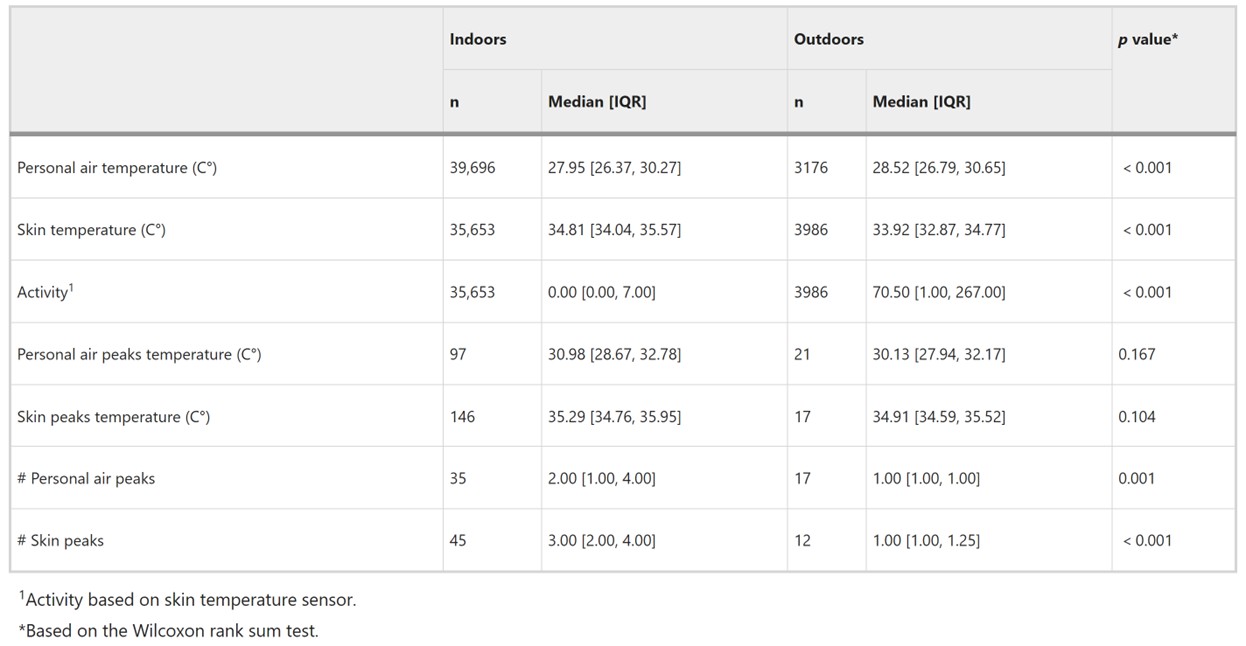
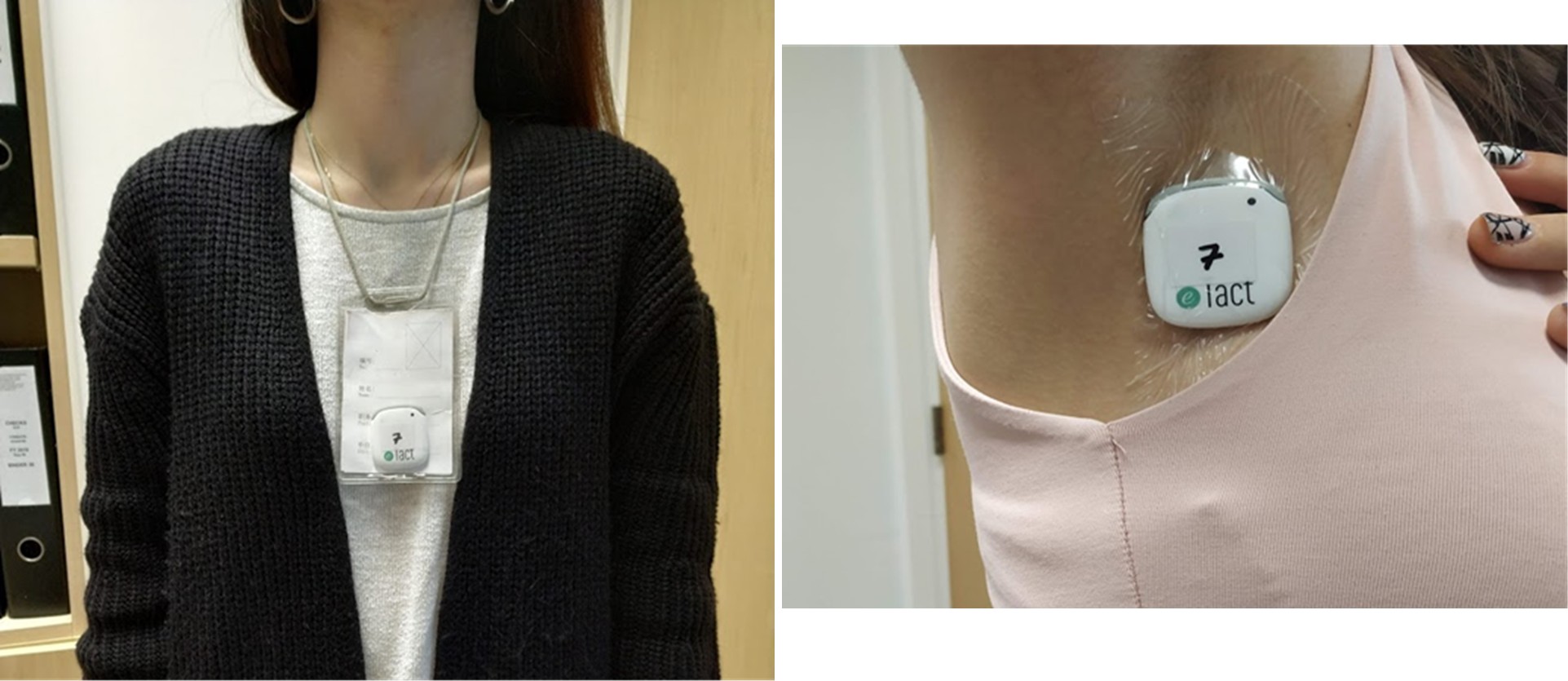
Figure 3 Wearable sensors (e-TACT, BodyCAP Medical, France) used for personal air and skin temperature measurements, as well as activity tracking. Two sensors were given per participant; one was worn as a tag on the participants’ chest area for the personal air measurement and another one, was attached directly to their left armpit (https://doi.org/10.1038/s41598-021-01180-y ).
Selected exposome studies by CLOTHO Lab
KC Makris, A Baccarelli, EK Silverman, RO Wright, 2025. How exposomic tools complement and enrich genomic research. Cell Genomics 5 (8)
C Konstantinou, G Soursou, S Abimbola, P Charisiadis, A Kyriacou, Makris, KC et al., 2025. Designing a children’s health exposomics study protocol: The CHILDREN_FIRST multi-country prospective cohort using multi-omics and personalized prevention approaches. medRxiv, 2025.06. 04.25329011
C Konstantinou, G Soursou, S Abimbola, P Charisiadis, A Kyriacou, Makris, KC et al., 2025. Designing a children’s health exposomics study protocol: The CHILDREN_FIRST multi-country prospective cohort using multi-omics and personalized prevention approaches. medRxiv, 2025.06. 04.25329011
C Konstantinou, S Gaengler, S Oikonomou, T Delplancke, P Charisiadis, Makris, KC, 2022. Use of metabolomics in refining the effect of an organic food intervention on biomarkers of exposure to pesticides and biomarkers of oxidative damage in primary school children. Environment international 158, 107008.
A Constantinou, S Oikonomou, C Konstantinou, KC Makris, 2021. A randomized cross-over trial investigating differences in 24-h personal air and skin temperatures using wearable sensors between two climatologically contrasting settings. Scientific Reports 11 (1), 22020
KC Makris, C Konstantinou, A Perikkou, AB Zdravic, CA Christophi, 2020. Contrasting short-term temperature effects on the profiling of metabolic and stress hormones in non-obese healthy adults: A randomized cross-over trial. Environmental Research 182, 109065
N Haddad, XD Andrianou, KC Makris, 2019. A scoping review on the characteristics of human exposome studies. Current Pollution Reports 5 (4), 378-393
XD Andrianou, KC Makris, 2018. The framework of urban exposome: application of the exposome concept in urban health studies. Science of the total environment 636, 963-967.