
embracing precision prevention
Tailoring medical models to the right person or risk subgroups delivered at the right time, is central to the goals of precision and personalized medicine and prevention. The time is right for biomedical sciences to incorporate the dynamic profiles of exposomic domains and their components into both clinical practice and precision public health, using data-driven methodologies. The CLOTHO Lab investigates chrono-repetitive habits, behaviors and lifestyles that become embedded in daily routines of healthy adults. These routines may be well synchronized or misaligned with the circadian clock system, influencing the eurhythmic functionality of peripheral metabolic clocks, like those in the liver.
CLOTHO Lab research on precision prevention explores chrono-regulated nutrition, behaviors and lifestyle changes using exposomics tools. For example, we have observed chrono-differentiated internal biological response to diet-originating pesticides during a time-restricted dietary intervention. This diurnal variability in the magnitude of internal biomarkers of exposure or downstream biological effects may arise from circadian disruption or modified behavioral and lifestyle routines.
Certain pharmaceuticals, on the basis of circadian metabolism. Pharmacokinetic and pharmacodynamics studies have shown the circadian clock regulation over drug potency in humans and animal models. However, to date, no comparable human chronotoxicity studies exist for common environmental chemicals (xenobiotics).
Exposomics is particularly relevant to precision public health initiatives that call for the integration of genetics, lifestyle, and environment toward disease prevention and control at the population level. Differences in disease susceptibility, progression, and severity may be characterized and linked with environmental exposures throughout the lifetime or during critical windows of susceptibility, offering promise for precision health applications in areas such as cancer treatment and diagnosis.
Time-resolved monitoring of individual and joint effects of the exposome and the genome, as they interact in the disease process, enables the integration of data across multiple -omics platforms (Figure 1). These data layers, when overlaid as biological layers that prospectively evolve over time, provide a dynamic foundation for understanding complex disease mechanisms.
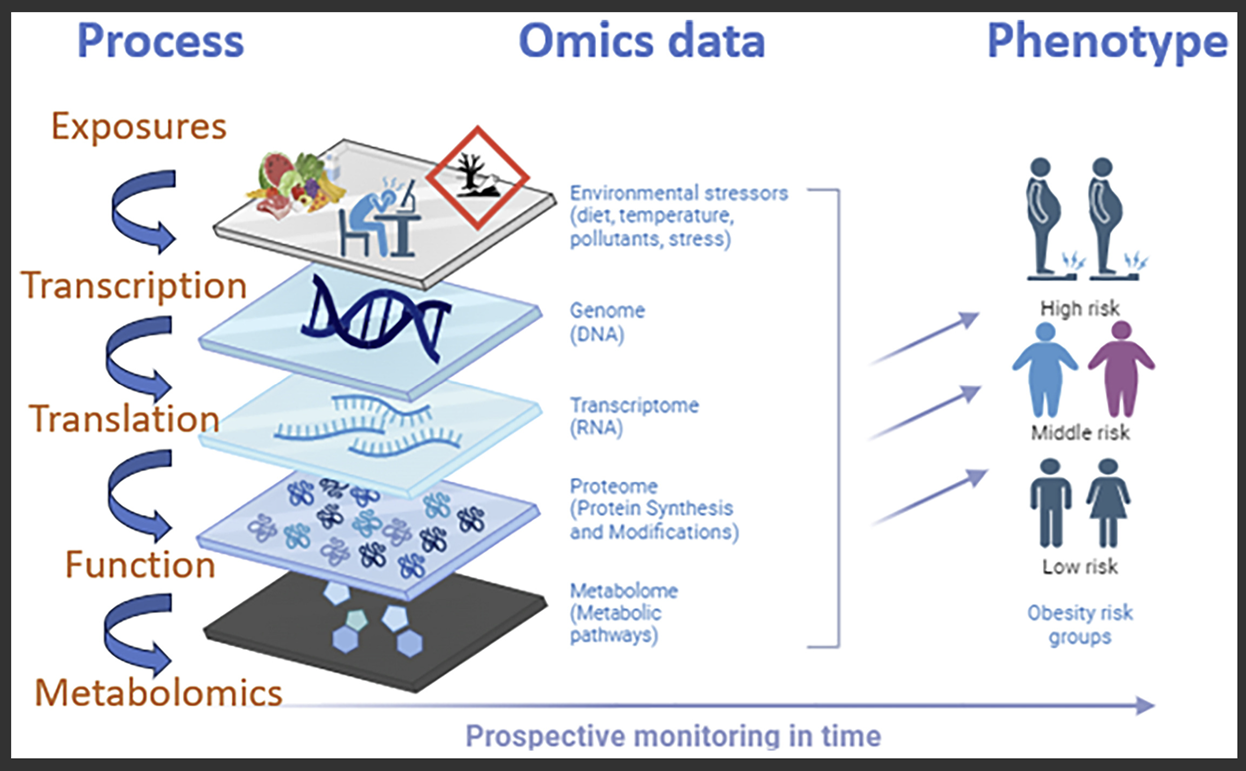
Figure 1 Time-resolved monitoring of individual and joint effects of the exposome (exposures) and the genome as they interact in the disease process across multiple -omics platforms overlaid as biological layers of information that prospectively evolve over time https://doi.org/10.1016/j.xgen.2025.100952
To identify and predict chronic disease risk prediction groups, machine learning algorithms, such as random forests, XGBoost, and neural networks are used, while DSA, elastic net or LASSO may be used first for feature selection. Unsupervised clustering techniques, like k-means, can be used to define disease risk groups or clusters, while targeted maximum likelihood estimation may be used to estimate the causal effects of modifiable exposures on predicted disease risk groups.
Chrononutrition research
Both contaminants and nutrients co-exist within foods; however, current regulatory frameworks, guided by a nutricentric dogma, consider only the nutrient attributes for health claim assessment (Makris and Chourdakis, 2024). Food may also impact human health beyond food safety, underscoring the need for holistic approaches in food characterization, that account for both nutritional and contaminant attributes.
Chrononutrition, which is the study of how meal timing aligns with circadian rhythm, regulates food contaminant metabolism and determines potential chrono-toxic windows of susceptibility in humans. Understanding how circadian rhythms and the circadian clock system interact with metabolic pathways to influence the processing of nutrients, bioactives and food contaminants, is of high importance in the emerging era of precision health and precision prevention.
Identifying which food contaminants are most affected by diurnal practices/behaviors, and which are mostly regulated by circadian and metabolic clocks, could advise specific precision nutrition schemes tailored to risk-stratified groups of individuals. Moreover, assessing the status and extent of synchrony in an individual’s circadian clock system would dictate the magnitude and variability of chrono-metabolic phenomena, influencing contaminant metabolism in foods and potentially other exposure media or compartments.
On average, individuals with misaligned, desynchronized, or disrupted circadian phases may face a higher risk of toxicity via oxidative stress and tissue damage mechanisms, compared with those maintaining a synchronized and well aligned circadian rhythm (Makris et al., 2023; Makris, 2021).
Figure 2. Schematic of the (de)synchronization aspects of the interface linking external exposome lifetime windows, such as, 24-h or periods of repetitive behaviors or critical life windows with the periodic resilience of circadian oscillators and metabolic regulators and that of downstream biological systems and processes (internal exposome); being in sync or not, these interfacial synchronization processes may lead to resilience, or alternatively to patterns of desynchronization and excess toxicity. https://doi.org/10.1002/bies.202100159
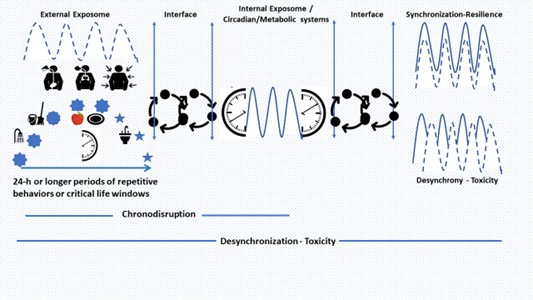
Figure 3. Changes in the biomarkers of exposure to 6-CN (left), 3-PBA (right) from the baseline (green) of each treatment period as a function of days since baseline measurement. 6-CN: 6-Chloronicotinic acid (log-transformed, creatinine adjusted, centered); 3-PBA: 3-phenoxybenzoic acid (log-transformed, creatinine adjusted, centered). https://doi.org/10.1016/j.isci.2022.105847
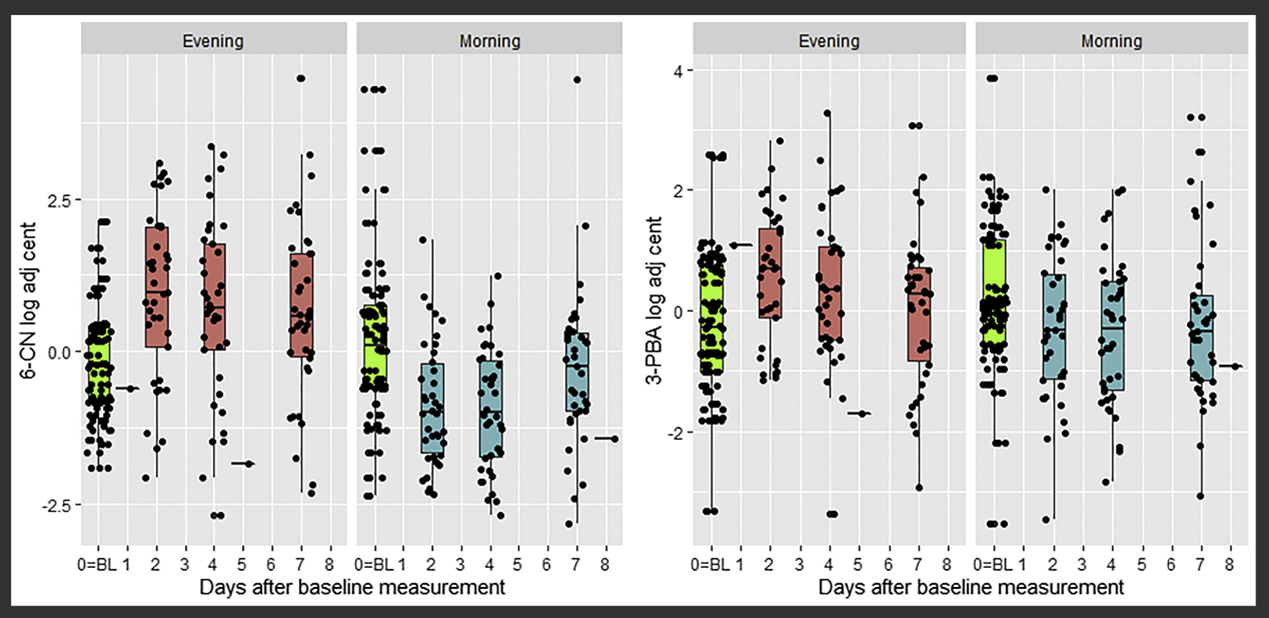
Figure 4. The methodological framework and tools of the EXPOSOWORK occupational exposome study. A, study design of the prospective chrono-metabolism NSW panel study, including the timeline of sample collection (orange colored bars: shift work duration, S: urine sample; white colored bars: days off work). B, the application of the human exposome methodological framework to the EXPOSOWORK panel study design, using the workers metabolome as an intermediate layer of biological information in the continuum of night shift work, including external BTEX chemical exposures and genotoxicity using the exposome concept and its exposomic tools. BTEX, benzene, toluene, ethylbenzene and xylenes. https://doi.org/10.1016/j.jncc.2025.01.006
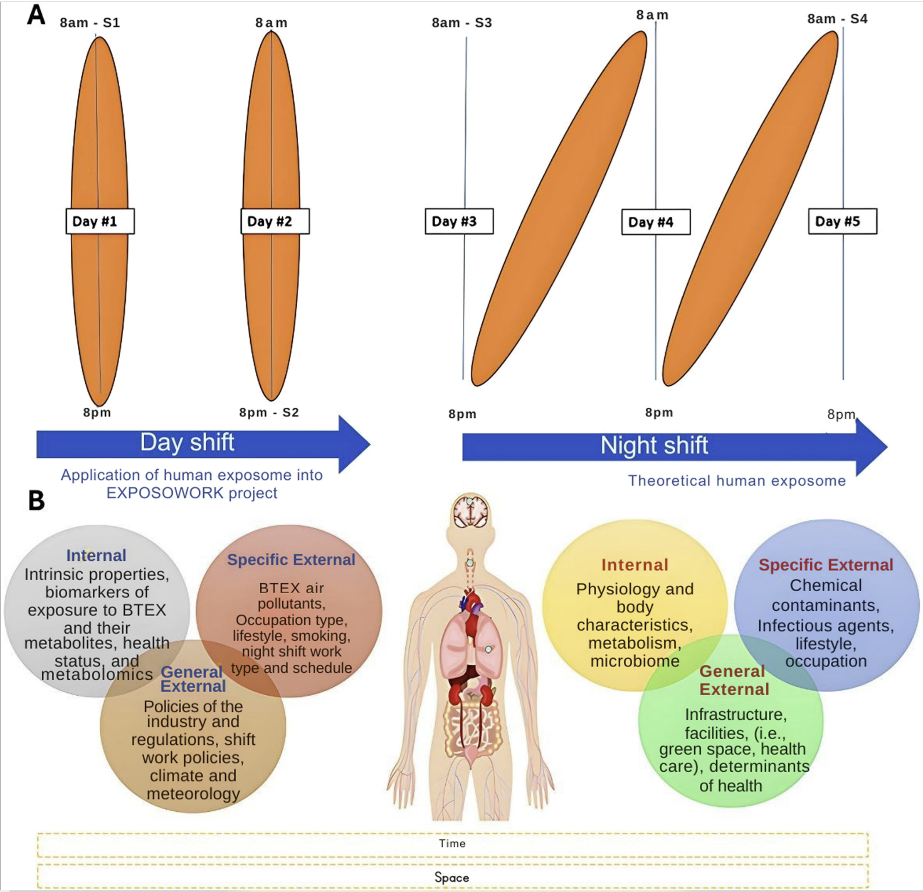
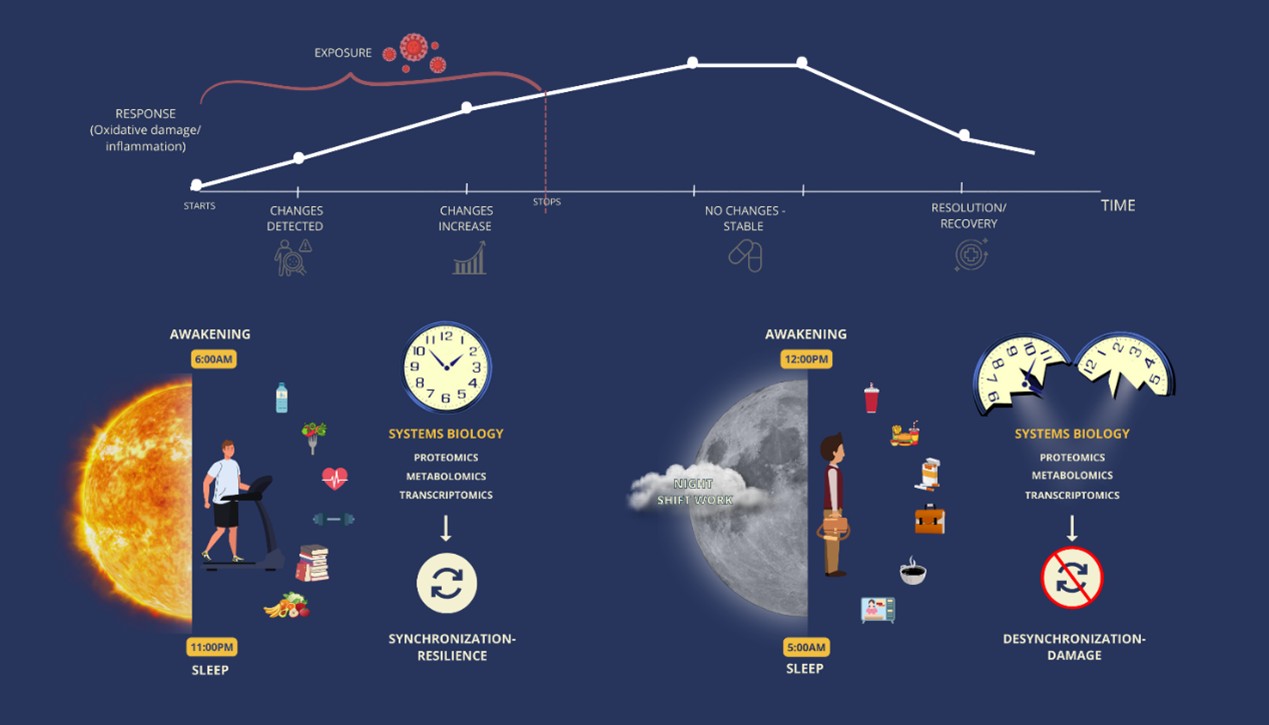
Figure 5. Illustrative schematic of a reversible and proportional oxidative stress/damage disease process model, including its resolution (top) upon onset and end of exposure to an environmental stressor. Below, the essence of night shift work’s chronotoxicity effects on oxidative stress/damage and/or inflammation is depicted, by demonstrating the importance of studying the desynchronized circadian clock regime. Desynchronized circadian clock system(s) might be the result of external stressors, e.g., systematic night shift work schedules that together with important confounders (diet, sleep, physical activity, light) would adversely impact endogenous response and disease process. This may be particularly well studied via a systems biology approach where various -omics platforms are utilized as intermediary biological layers of information between the exposures/stressors and the health outcomes under study. https://doi.org/10.1016/j.envint.2023.108048
Selected studies by CLOTHO Lab embracing precision prevention
KC Makris, 2021. Desynchronized circadian clock and exposures to xenobiotics are associated with differentiated disease phenotypes: the interface of desynchronized circadian clock and exposures. BioEssays 43 (11), 2100159
E Ioannou, S Oikonomou, N Efthymiou, A Constantinou, T Delplancke, Makris, KC, 2023. A time differentiated dietary intervention effect on the biomarkers of exposure to pyrethroids and neonicotinoids pesticides. Iscience 26 (2)
B Heibati, G Soursou, S Abimbola, P Charisiadis, L Eleftheriou, Makris, KC, 2025. BTEX chrono-metabolism and leukemogenic effects of night shift work in workers of gasoline stations: the EXPOSOWORK prospective panel study in Bulgaria. Journal of the National Cancer Center.
KC Makris, B Heibati, SZ Narui, 2023. Chrono-modulated effects of external stressors on oxidative stress and damage in humans: A scoping review on night shift work. Environment International 178, 108048
KC Makris and M Chourdakis, 2024. The Need for an Alternative Health Claim Process for Foods Based on Both Nutrient and Contaminant Profiles. Curr Dev Nutr., 25;8(6):103764. doi: 10.1016/j.cdnut.2024.103764.